
Behind modern production, there is a silent yet stringent "quality inspector". It possesses a pair of "precision eyes" capable of perceiving microns, ensuring that every part that leaves the factory perfectly meets the stringent requirements of the design drawings. This "quality inspector" is the Coordinate Measuring Machine (CMM). It is hailed as the "reference tool for geometric measurement" and is an indispensable part of modern manufacturing quality control systems. In simple terms, it is a highly sensitive "contact sensor" that can move freely in three-dimensional space, capturing countless spatial coordinates on the surface of an object with precision, in order to reverse-engineer and evaluate the object's geometric shape.
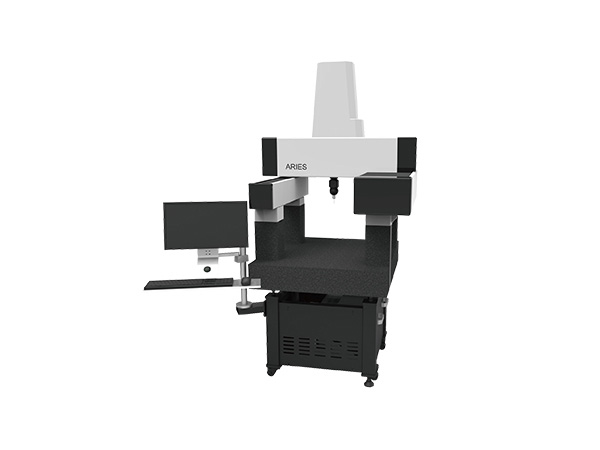
A typical coordinate measuring machine mainly consists of three core systems. First is the mechanical mainframe, which usually uses granite with stable structure and extremely low thermal expansion coefficient as the base and guide rail, providing a stable platform for high-precision measurement. Second is the probe system, which is the "finger" of the measuring machine. When the precise ruby probe gently touches the surface of the workpiece, it triggers a signal recording the coordinates of that point. Finally, there are the software and control systems, which serve as the "brain" of the measuring machine. They not only control the precise movement of the machine but also use complex algorithms to fit the massive collected point data into geometric features such as circles, cylinders, and surfaces, compare them with the design model, and ultimately generate detailed inspection reports.
The significance of the coordinate measuring machine goes far beyond replacing traditional measuring tools such as micrometers and calipers. It can complete the inspection of dozens or even hundreds of dimensional, shape, and positional tolerances on complex workpieces in a short time, reducing cumbersome inspection tasks from hours to minutes. More importantly, it digitizes measurement results, providing valuable feedback information for the production process. Engineers can adjust process parameters based on this data, fundamentally controlling and improving product quality, truly achieving the leap from "passive inspection" to "active control".


